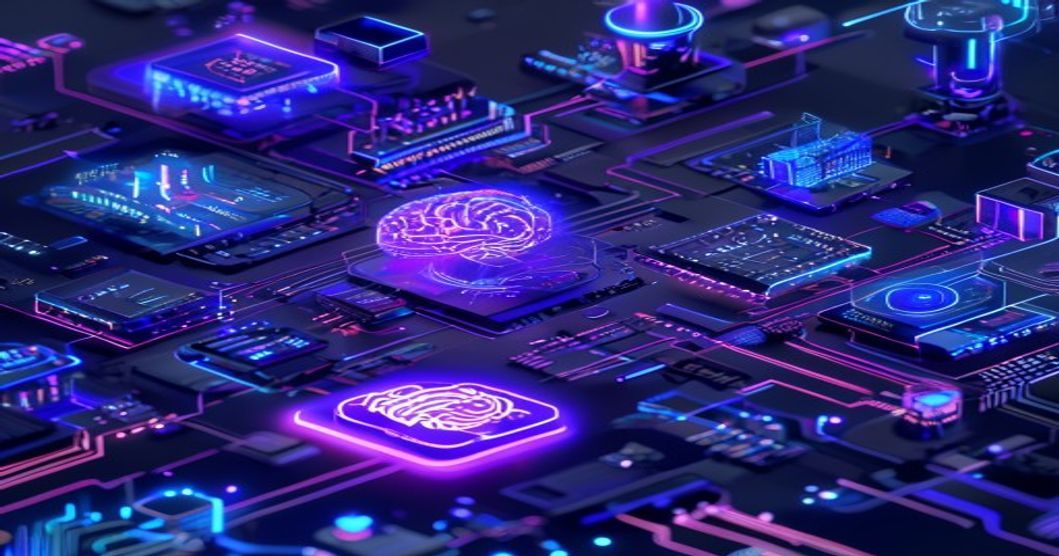

Overview
Modern technology trends are fundamentally reshaping how businesses operate, compete, and deliver value to customers. Furthermore, From artificial intelligence to edge computing, understanding and adopting these emerging technologies has become essential for organizations seeking to maintain competitive advantage in an increasingly digital marketplace.
Artificial Intelligence and Machine Learning
Artificial intelligence has transitioned from experimental technology to practical business tool across virtually every industry. Machine learning models now power recommendation engines, fraud detection systems, predictive maintenance, and customer service chatbots. The emergence of large language models has opened new possibilities for automating knowledge work, content generation, and complex decision support. Organizations are exploring AI applications ranging from drug discovery to supply chain optimization.
However, AI adoption also brings challenges including data privacy concerns, algorithmic bias, and the need for explainability in critical decisions. Building robust AI governance frameworks ensures that AI systems operate fairly, transparently, and in alignment with organizational values. Additionally, As regulatory requirements around AI emerge, organizations must establish practices for documenting model development, testing for bias, and maintaining audit trails.
Cloud Computing and Multi-Cloud Strategies
Cloud computing has matured beyond basic infrastructure hosting to encompass sophisticated platform services, serverless computing, and cloud-native development frameworks. Multi-cloud strategies that distribute workloads across multiple cloud providers help organizations avoid vendor lock-in, optimize costs, and leverage best-of-breed services. Moreover, Hybrid cloud architectures extend on-premises infrastructure with cloud resources, enabling workloads to move dynamically based on performance, cost, and compliance requirements.
Cybersecurity Evolution
Consequently, The cybersecurity landscape continues to evolve as attackers leverage AI and automation to increase the scale and effectiveness of their operations. Organizations are responding by deploying AI-powered security tools capable of detecting novel threats and responding in real time. Zero trust security models are becoming standard practice, replacing perimeter-based approaches that assumed internal networks were inherently trustworthy.
As a result, Extended detection and response platforms consolidate security monitoring across endpoint, network, cloud, and identity sources, providing unified visibility and enabling coordinated response. Cloud security posture management helps organizations maintain secure configurations as they scale cloud deployments. Security service edges integrate networking and security functions, enabling consistent protection regardless of where users and workloads are located.
Internet of Things and Edge Computing
In addition, The proliferation of IoT devices is generating unprecedented volumes of data that must be collected, processed, and analyzed in real time. Edge computing addresses the limitations of cloud-centric architectures by processing data closer to its source, reducing latency and bandwidth requirements. This is particularly important for applications requiring immediate response, such as autonomous vehicles, industrial automation, and healthcare monitoring systems.
Therefore, Securing IoT environments presents unique challenges due to the diversity of devices, limited computational resources, and frequent deployment in uncontrolled physical environments. Meanwhile, Organizations must implement device identity management, secure boot processes, and regular firmware updates to protect against compromised devices becoming entry points for larger attacks.
Quantum Computing and Post-Quantum Security
Quantum computing promises to solve certain computational problems exponentially faster than classical computers, with profound implications for cryptography. Current public-key encryption systems that protect sensitive communications and financial transactions may become vulnerable to quantum attacks. Similarly, While large-scale quantum computers capable of breaking encryption do not yet exist, organizations should begin planning for post-quantum cryptography by inventorying cryptographic assets and evaluating migration strategies.
Automation and Robotics
Robotic process automation is transforming business operations by automating repetitive manual tasks, freeing employees to focus on higher-value activities. Intelligent automation combines RPA with AI to handle more complex workflows that require judgment and interpretation. In manufacturing, collaborative robots work alongside humans to increase productivity while maintaining safety standards.
Data Analytics and Business Intelligence
Advanced analytics capabilities enable organizations to extract actionable insights from ever-growing data volumes. Real-time analytics dashboards provide operational visibility, while predictive models forecast demand, identify risks, and optimize processes. Data mesh architectures shift from centralized data warehouses to domain-oriented ownership, improving data quality and accessibility while enabling faster innovation.
Related Reading
For deeper context on modern technology trends, see also: AI cybercrime surge, cyber threat landscape 2026 and cyber threats strategy.
Related Reading
For more context, see also: AI cybercrime trends.
Conclusion
Staying competitive in the modern technology landscape requires continuous learning, experimentation, and strategic investment in emerging capabilities. Organizations that successfully navigate technological change position themselves for sustainable growth and market leadership. Importantly, By understanding the practical applications and implications of these trends, business and technology leaders can make informed decisions about where to focus their digital transformation efforts.
For more information, visit https://www.gartner.com/en/topics/emerging-technologies.
For more information, visit https://www.mckinsey.com/featured-insights/artificial-intelligence.
For more information, visit https://www.ieee.org/.