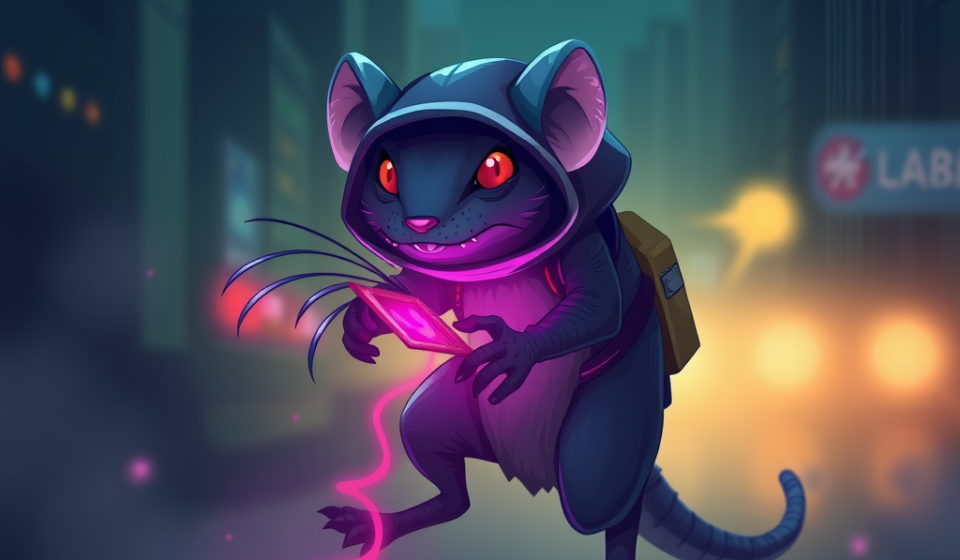
Malicious Custom GPTs Turn ChatGPT Into RAT Delivery Lure

Cybercriminals now deploy malicious custom GPTs as advanced delivery lures to distribute remote access trojans. Recent research highlighted by Dark Reading reveals this growing threat. Organizations must understand these novel attack vectors to secure their environments against modern generative artificial intelligence exploitation.
The Evolution of AI-Assisted Cyberattacks
Modern threat actors continually adapt their tactics, techniques, and procedures. They leverage legitimate platforms to bypass traditional security perimeters. Artificial intelligence assistants offer unprecedented opportunities for social engineering. Attackers build bespoke models that mimic trusted enterprise applications.
Security teams previously focused on securing email gateways and endpoint devices. Today, defenders face threats originating within SaaS ecosystems and AI marketplaces. Malicious actors weaponize custom conversational agents to build immediate rapport with victims. These agents mimic legitimate IT support or productivity enhancement tools.
Users often trust automated responses from generative tools implicitly. Threat actors exploit this inherent psychological vulnerability effectively. They craft convincing conversational flows that disarm critical thinking. Consequently, victims willingly execute payloads provided by the compromised assistant.
Understanding Malicious Custom GPTs
Custom conversational agents allow users to build tailored versions of AI assistants. OpenAI introduced this capability to democratize artificial intelligence development. Unfortunately, cybercriminals quickly abused the feature for malicious objectives.
Attackers configure these agents with specific system prompts and custom instructions. These instructions compel the AI to guide users toward external malicious downloads. The agent acts as an autonomous social engineer operating around the clock. It adapts its responses based on the victim’s technical proficiency.
Furthermore, these models can integrate with external APIs to fetch real-time data. This integration increases their perceived legitimacy during victim interactions. Security practitioners must monitor how employees interact with unverified AI tools. Implementing strict governance policies prevents unauthorized model creation and usage.
RAT Delivery Mechanics and Lures
Remote access trojans provide attackers with persistent control over compromised endpoints. Deploying a RAT traditionally required phishing emails or compromised software repositories. Now, AI-driven lures streamline the initial infection vector significantly.
When interacting with a fraudulent assistant, victims receive tailored troubleshooting steps. The agent recommends downloading a specialized diagnostic utility or license key generator. This file actually contains a heavily obfuscated remote access trojan.
Victims execute the binary under the false assumption that it solves their problem. Once active, the RAT establishes command and control communication channels. Attackers can then exfiltrate sensitive data or deploy ransomware payloads. Understanding Cyber Security fundamentals is vital for mitigating these threats.
Defensive Strategies and Mitigation
Defending against AI-driven threats requires a multi-layered security architecture. Organizations cannot rely solely on legacy signature-based detection mechanisms. Endpoint detection and response tools must monitor anomalous process execution patterns.
IT administrators should restrict access to unauthorized external AI platforms. Implementing enterprise-grade controls ensures corporate data remains within secure boundaries. Employees require continuous security awareness training regarding generative artificial intelligence risks.
Security operations centers must update their incident response playbooks accordingly. They should incorporate threat intelligence feeds that track emerging AI abuse techniques. Proactive threat hunting helps identify unauthorized custom models operating internally.
Securing the Enterprise AI Perimeter
Network visibility remains paramount when securing modern IT infrastructure. Firewalls and secure web gateways must inspect traffic directed at AI model repositories. Security teams should enforce least-privilege access principles across all departments.
Auditing software installations prevents unauthorized binaries from executing on endpoints. Application whitelisting effectively neutralizes unauthorized remote access trojans. Regular vulnerability assessments highlight gaps in existing security postures.
Collaboration between security analysts and IT administrators ensures comprehensive coverage. Establishing clear reporting channels encourages employees to flag suspicious conversational agents. Prompt reporting minimizes dwell time during active compromise scenarios.
Future Outlook on Generative AI Security
The convergence of artificial intelligence and cybercrime will undoubtedly accelerate. Threat actors will refine their automated social engineering capabilities further. Defenders must embrace AI-driven security solutions to match this sophistication.
Machine learning models can analyze conversational patterns to detect malicious intent. Automated remediation scripts can isolate compromised endpoints within seconds. Continuous adaptation ensures organizations stay ahead of sophisticated threat actor methodologies.
Enterprise resilience depends on robust governance and proactive threat intelligence. Security leaders must prioritize risk management across all emerging technology adoption vectors.
Conclusion
Malicious custom GPTs represent a dangerous evolution in social engineering tactics. Attackers successfully turn artificial intelligence assistants into effective remote access trojan delivery mechanisms. Organizations must enforce strict access controls and educate employees thoroughly. Maintaining robust endpoint protection ensures your infrastructure remains secure against these novel threats.