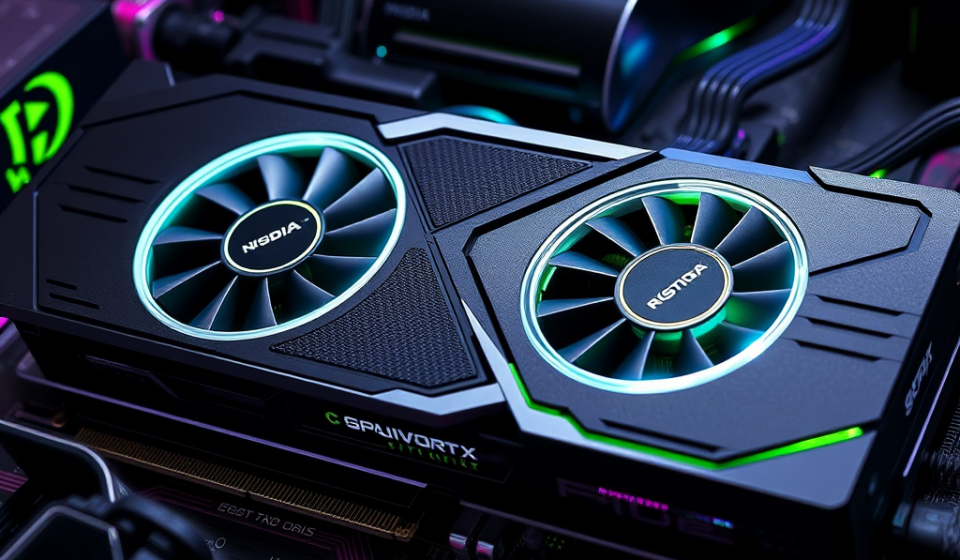
GPUThor Rowhammer Defeats ECC on NVIDIA RTX A6000 for Root Access

GPUThor Rowhammer attack techniques successfully defeat ECC memory protections on NVIDIA RTX A6000 enterprise hardware. Modern security teams must reevaluate enterprise hardware risks immediately.
Understanding the GPUThor Rowhammer Threat on NVIDIA RTX A6000
Hardware security researchers recently uncovered a groundbreaking exploit chain known as GPUThor. This attack targets high-end enterprise graphics processing units. Specifically, it compromises secure memory subsystems in professional environments. Such vulnerabilities threaten modern cloud providers and machine learning clusters alike.
Hardware vulnerabilities often bypass traditional software defenses. Cybersecurity practitioners track these developments closely via resources like Cybersecurity archives. Enterprise infrastructure relies heavily on specialized hardware accelerators today. Attackers now weaponize physical properties of silicon against us.
Traditional Rowhammer exploits targeted standard system RAM. However, modern enterprise accelerators incorporate advanced Error-Correcting Code memory. Manufacturers assumed ECC protections would completely mitigate bit-flipping attacks. GPUThor shatters this long-held industry assumption.
How GPUThor Bypasses Hardware ECC Protections
Error-Correcting Code memory detects and corrects single-bit memory errors. It can also detect multi-bit errors to prevent data corruption. GPUThor circumvents these protective measures through precise, high-frequency memory access patterns. Researchers discovered subtle flaws in memory controller scheduling algorithms.
Attackers trigger rapid, targeted voltage fluctuations inside the memory chips. These fluctuations exhaust the error-correction capabilities of the controller. Consequently, persistent bit flips occur despite active ECC checks. Security analysts detailed these findings in a comprehensive report by The Hacker News.
Hardware designers face immense pressure to deliver maximum performance. Speed often supersedes rigorous physical isolation between memory banks. GPUThor exploits this architectural trade-off to achieve memory corruption.
Gaining Host Root Access via Compromised GPU Memory
Memory corruption inside a dedicated GPU accelerator sounds isolated. Unfortunately, modern systems share complex address spaces between host CPUs and accelerators. Attackers leverage GPU memory corruption to bridge the virtualization gap. This escalation path ultimately yields full host root privileges.
Privilege escalation vectors require deep understanding of system architecture. Professionals study these complex threat vectors within dedicated Vulnerability Management frameworks. Once attackers control GPU memory mapping structures, they rewrite hypervisor pointers.
This malicious pointer manipulation grants arbitrary read and write capabilities across the host system. Root access allows attackers to deploy persistent rootkits and steal encryption keys. Multi-tenant cloud environments face severe risks from this attack methodology.
Mitigation Strategies and Immediate Action Items
Securing enterprise infrastructure against advanced hardware attacks requires layered defenses. Organizations must apply available vendor firmware patches immediately. Hardware-level mitigations often require microcode updates from silicon manufacturers.
System administrators should implement strict isolation policies for high-performance computing clusters. Monitoring tools must track abnormal memory access frequencies and voltage anomalies. Proactive detection remains vital for stopping sophisticated threat actors.
Enterprise risk managers need to audit their hardware inventory. Upgrading vulnerable workstation and server components prevents catastrophic breaches. Vigilance ensures resilient defenses against evolving hardware exploits.
Conclusion
GPUThor Rowhammer exploits prove that enterprise ECC memory is not foolproof. Organizations must monitor hardware vendors for critical microcode patches. Deploying strict tenant isolation and continuous monitoring safeguards critical infrastructure today.