Skip to content
-
Subscribe to our newsletter & never miss our best posts. Subscribe Now!
Yuniawan Tri Cahyono

Empowering Cybersecurity Through Intelligent Automation.

Yuniawan Tri Cahyono

Empowering Cybersecurity Through Intelligent Automation.

  • Home
  • Topics
    • IT Security
      • GRC
        • Identity & Access Management
      • CyberSecurity
        • Defensive Security
          • Incident Response
          • Security Monitoring
            • SIEM
            • SOAR
          • Security Operations
            • Data Protection
            • Security Automation
        • Offensive Security
          • Cyber Threat Hunting
          • Phishing
          • Red Team
          • Threat & Vulnerability
          • Vulnerability Research
    • IT Infrastructure
      • Cloud & Virtualization
      • DevSecOps
      • Linux Security
      • Network Infrastructure
        • Network Operations
        • Network Security
        • Routing & Switching
      • Windows Security
    • Application Security
    • Cloud Security
    • Cryptography & Key Management
    • Maintenance Services
Close

Search

  • https://www.facebook.com/
  • https://twitter.com/
  • https://t.me/
  • https://www.instagram.com/
  • https://youtube.com/
Subscribe
Home/IT Security/CyberSecurity/1M+ Emails Use Hidden Text to Dupe AI Security Filters: Analysis
CyberSecurityDefensive SecurityIT Security

1M+ Emails Use Hidden Text to Dupe AI Security Filters: Analysis

By Yuniawan Tri Cahyono
July 25, 2026 2 Min Read
0

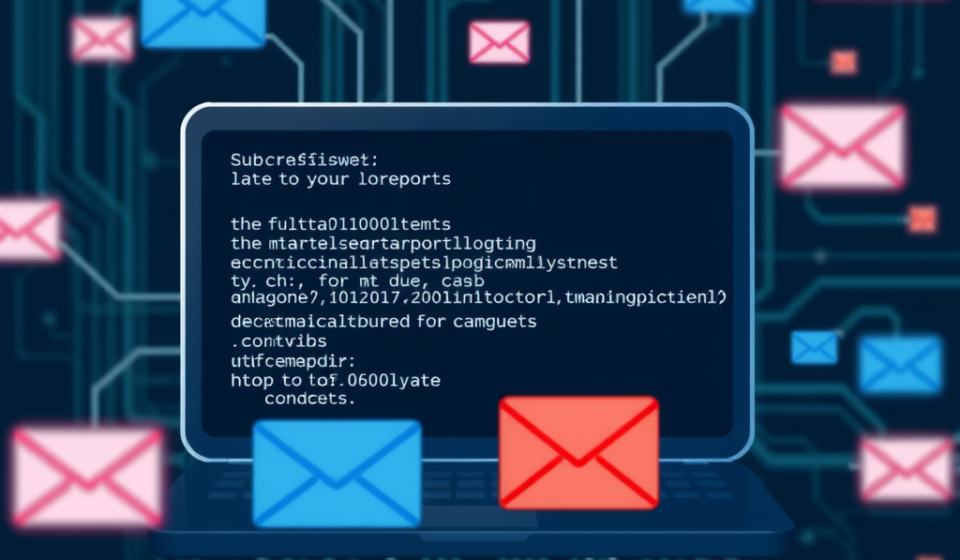
In the evolving threat landscape, 1M+ emails use hidden text to dupe AI security filters, posing a major risk. Attackers now hide malicious content from automated scanners using clever techniques. Consequently, security teams must adapt quickly to stay ahead of these persistent adversaries.

The Evolution of Email Threats

Modern cyberattacks have become increasingly sophisticated. Threat actors exploit AI security tools by bypassing standard detection logic. These attackers hide malicious payloads within legitimate-looking HTML structures. Frequently, they inject invisible text to confuse the underlying AI models. Therefore, traditional signature-based detection systems often fail to intercept these deceptive messages.

How 1M+ Emails Use Hidden Text to Dupe AI Security Filters

Researchers recently discovered a massive campaign utilizing this specific obfuscation technique. Attackers inject zero-width characters or CSS-hidden elements into email bodies. These elements manipulate the semantic parsing of natural language processing (NLP) models. Furthermore, the AI ignores the malicious intent while focusing on the benign visible text. This disparity creates a dangerous blind spot for enterprises.

Defending Against AI-Driven Deception

Organizations must rethink their current email defense strategies. Relying solely on automated AI filters is no longer a sufficient security posture. Instead, defenders should adopt a layered approach that integrates cybersecurity best practices. Robust endpoint protection and user awareness training remain critical components. In addition, organizations must monitor for anomalies in email traffic patterns.

Advanced Detection Tactics

Security teams should implement advanced threat hunting to detect hidden payloads. Analysts must inspect the raw HTML source code of suspicious emails regularly. Tools like the Dark Reading report highlight the urgency of these manual inspections. By correlating metadata with behavioral analysis, teams can identify these subtle threats. Proactive measures significantly reduce the risk of successful phishing campaigns.

Mitigation and Best Practices

To combat these threats, security architects should harden their mail gateways. Implementing stricter content security policies helps mitigate hidden script execution. Furthermore, organizations should deploy multi-factor authentication (MFA) to minimize the impact of compromised credentials. Continuous monitoring allows teams to respond to incidents with greater speed. Ultimately, a proactive stance effectively mitigates the risk posed by AI-evasion techniques.

Conclusion

The discovery that 1M+ emails use hidden text to dupe AI security filters serves as a stark warning. Attackers constantly refine their methods to bypass modern defenses. Organizations must combine advanced technology with human-led threat hunting to maintain resilience. Please prioritize robust security configurations to protect your digital perimeter effectively today.


Tags:

AI SecurityCybersecuritydetectionincident responsePhishing
Author

Yuniawan Tri Cahyono

Cybersecurity and IT Infrastructure Architect designing secure, automated, and scalable environments. From enterprise-level system monitoring to AI-driven workflows and proactive threat mitigation, I build resilient tech ecosystems. Explore structured insights on IT operations, strategic security, and smart automation designed to future-proof your infrastructure.

Follow Me
Other Articles
Previous

Cyber Threat Landscape: Spyware, Ransomware & New Risks

Next

SharePoint RCE Zero-Day CVE-2026-58644 Added to CISA KEV

No Comment! Be the first one.

Leave a Reply Cancel reply

You must be logged in to post a comment.

Copyright 2026 — Yuniawan Tri Cahyono. All rights reserved. Blogsy WordPress Theme