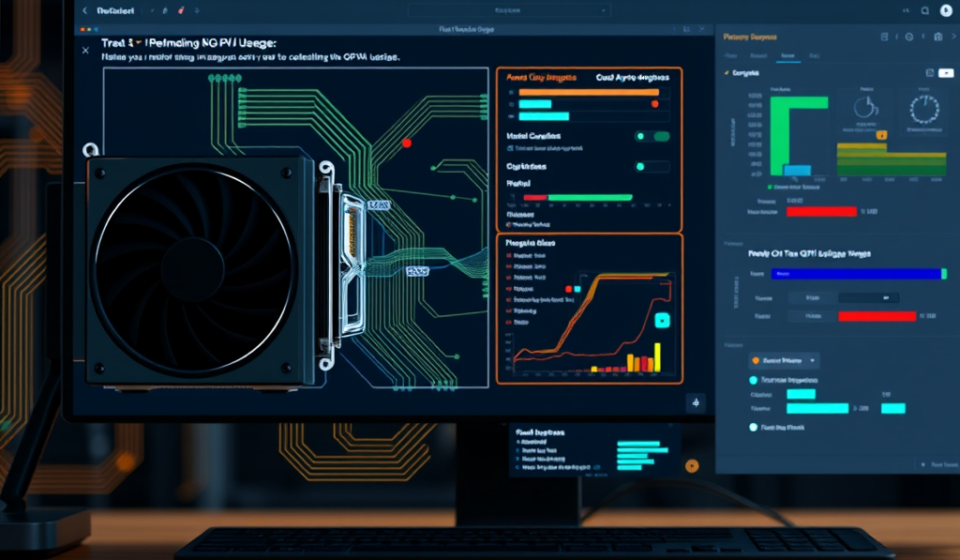
Optimize GPU Usage and AI Deployment with Workflow Navigator

Organizations often waste massive budgets on idle AI infrastructure because manual orchestration fails at scale. To fix this, you must optimize GPU usage through smart containerization and orchestration platforms. Modern enterprises struggle with surging cloud bills. Engineers often provision massive GPU clusters without realizing actual runtime demands. Consequently, compute budgets vanish before models ever reach production.
You can regain control over your infrastructure spending. By implementing strategic workflow navigation, IT teams streamline deployments and eliminate resource waste. Let us explore proven methods to secure your AI pipelines and reduce operational expenditure significantly.
Understanding AI Infrastructure Waste
Modern machine learning workflows require immense computational power. Hardware acceleration chips remain expensive assets within any modern IT budget. Unfortunately, poor resource allocation causes severe bottlenecks and financial drainage.
Many teams spin up dedicated GPU nodes for sporadic tasks. These nodes sit idle during data preprocessing stages. Such practices inflate cloud invoices unnecessarily.
Organizations must audit their current architectures. Tracking utilization metrics reveals hidden inefficiencies in daily operations. For further reading, check out our Cloud Computing category.
The Hidden Costs of Unoptimized Workloads
Unoptimized models consume excessive memory bandwidth. When data pipelines lack proper synchronization, hardware utilization drops below optimal thresholds. Teams buy more hardware instead of tuning software.
Scaling blindly creates technical debt. Infrastructure engineers spend hours troubleshooting memory leaks rather than improving performance. This approach delays time-to-market for vital artificial intelligence applications.
Moreover, security vulnerabilities multiply across fragmented environments. Unmanaged endpoints expose sensitive training data to potential breaches. Proper governance ensures both cost control and robust data protection.
Why Traditional Orchestration Falls Short
Legacy tools struggle with dynamic machine learning workloads. Standard Kubernetes clusters lack native awareness of specialized hardware accelerators. Hence, scheduling jobs efficiently becomes extremely difficult.
Engineers resort to custom scripts. These fragile scripts break during major system upgrades. Maintaining custom tooling drains engineering hours away from core product innovation.
Unified workflow navigators solve these systemic issues. They automate resource allocation based on real-time telemetry. Thus, workloads scale dynamically without manual intervention.
Implementing Workflow Navigators for Cost Efficiency
A workflow navigator acts as the central brain for your pipeline. It orchestrates data ingestion, model training, and inference serving seamlessly. By consolidating these steps, teams eliminate redundant computing tasks.
Smart schedulers direct jobs to the most cost-effective nodes. If a task requires standard CPU power, the system avoids expensive accelerators. This intelligent routing preserves premium hardware for heavy neural network training.
Automation transforms financial forecasting. CFOs gain predictable expenditure reports because resource usage aligns directly with actual output.
Best Practices for Model Deployment
Deploying models requires rigorous testing and continuous monitoring. Container engines package dependencies neatly, ensuring consistent behavior across different environments.
Always quantize your models before production release. Quantization reduces memory footprints without sacrificing predictive accuracy. Smaller models demand fewer hardware resources during inference phases.
Implement rolling updates to prevent downtime. Automated deployment pipelines swap out old model versions gracefully. Users experience zero service interruption during upgrades.
Monitoring and Telemetry in Production
Visibility drives optimization. Without comprehensive telemetry, teams operate blindly. Prometheus and Grafana dashboards offer clear insights into GPU temperature, memory usage, and core utilization.
Set up automated alerts for idle thresholds. If a node remains underutilized for extended periods, the system should scale it down automatically.
Regular audits keep your architecture lean. Review logs weekly to identify recurring bottlenecks. Continuous refinement guarantees long-term financial sustainability.
Securing Your AI Pipeline
Cost reduction must never compromise security. As you streamline deployments, protect your models against adversarial attacks and data exfiltration.
Adopt strict access controls across all environments. Role-based permission structures ensure that only authorized personnel modify production configurations.
Encrypt data both at rest and in transit. Compliance standards demand rigorous data stewardship, especially within highly regulated industries.
Managing Access Control
Zero-trust architectures provide the best defense against internal threats. Every API request undergoes stringent authentication checks before execution.
Audit user actions continuously. Centralized logging helps security teams trace anomalies back to their root cause swiftly.
Integrate identity providers with your orchestration platform. Seamless single sign-on minimizes credential fatigue among developers.
Compliance and Governance
Regulatory frameworks evolve constantly. Automated compliance checks prevent costly fines and legal complications.
Document every stage of your machine learning lifecycle. Reproducibility proves vital during regulatory audits.
Maintain clear provenance records for training datasets. Knowing data origins protects your enterprise from intellectual property disputes.
Conclusion
Controlling AI expenses demands a proactive infrastructure strategy. By utilizing advanced orchestration and monitoring tools, your enterprise slashes cloud waste effectively. Begin auditing your GPU workloads today and build a sustainable, secure artificial intelligence future.